
Richard Stallman talks about GNU’s 25th anniversary, Google Chrome, sharing non-free software, preinstalled GNU/Linux on pc, NDA, OLPC XO
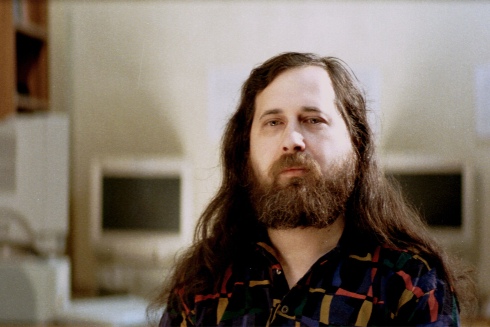
Qui in Italiano. | Aqui em Português | Русский
Q: Mr. Stallman, GNU project is 25 years-old. Our readers generally well know its history. You wrote: "The free world is the new continent in cyberspace". In 1983, did you imagine this continent would grow so much? What are the most important goals for Free software movement today?
RMS: In 1983 I did not try to envision what would happen beyond completing the GNU system. I thought carefully about the major hurdles for developing the system, but I did not try to anticipate what would happen after that, such as the obstacles that proprietary software companies would put in our path, or that we would start to influence the laws of some countries. I also never imagined that someone else would add the last piece and most people would give him credit for the whole thing.
Today GNU/Linux is a complete free operating system, but there are thousands of different "distributions" of GNU/Linux, and most of them are not free: they include or steer people towards non-free programs. As a result, most of the users of GNU/Linux have not entirely reached the free world. Most of them are not trying to reach the free world, and do not even know it exists: no one has ever suggested to them that there is an issue of freedom at stake. That's because most discussion of the GNU/Linux system doesn't talk about freedom. The corporations involved with GNU/Linux prefer to talk about practical advantages rather than ethics. Many of them use the term "open source", which was promoted as a way of avoiding the issues of users' freedom. (See http://www.gnu.org/philosophy/open-source-misses-the-point.html.)
Q: Some GNU/Linux and free software fans think that non authorized copies of proprietary software (that are widely used in our country, Italy) are a brake on free software spread. So, when police punish who uses non authorized copies, fans are happy. They think: "Ok, 'cracked' Microsoft Windows users will install free software now". Are these fans in right or not?
RMS: At the tactical level, their conclusion is logical: if it were more difficult to copy Windows, it would be more expensive to use, and the price would send some users towards GNU/Linux and other free systems.
If just increasing the usage of these systems were our ultimate goal,it would be rational to applaud the repression of sharing of non-free software.
But that kind of thinking is amoral. We must not applaud an act of repression, even if we think that it will backfire and drive people to rebel.
The basic idea of the free software movement is that stopping people from sharing and changing software is an injustice. When the police punish people for sharing, they commit an injustice. We must not call this a good thing!
If you can succeed in copying Windows, that does not mean it is effectively like free software. You still don't have the source code, so you cannot change it. You cannot eliminate its malicious features. (We know about surveillance, restriction of the user, and even back doors, and there might be more that we don't know about.)
We must not applaud repression, but we can talk about it. When police punish people for sharing, we should tell the public, "Watch out - if you use forbidden copies of Windows, Microsoft's bullies may catch you and attack you. Escape from Windows, escape from MacOS, escape from non-free software, and join us in the Free World!"
Q: Some days ago, Google released a web browser called Google Chrome. Its source code is free software [here the license] but the binaries are under a restrictive license. Electronic Frontier Foundation talked about privacy dangers using Chrome. What's your opinion?
RMS: The license for those binaries is unacceptable for several reasons.
For instance, it says you give Google the right to change your software and requires you to accept whatever changes they decide to impose. It purports to forbid reverse engineering. It also uses the confusing and biased propaganda term "intellectual property". (See http://www.gnu.org/philosophy/not-ipr.html for why this term should never be used.)
You should not agree to those terms.
Google is following the footsteps of Firefox. Firefox has done this since it first appeared: the source code is free, but the binaries released by the Mozilla Foundation carry an unacceptable EULA.
Q: Will GNU project release a fully free browser based on chromium.org source code? (like IceCat is based on Mozilla Firefox code). If not, do you think that a fully free version of Chrome should be a good thing?
RMS: I hope someone will distribute free binaries made from the Chrome sources. People have done that for Firefox for years. It doesn't need to be the GNU Project.
The reason we developed GNU IceCat from Firefox is more specific. The free Firefox variants released by others, with names such as IceWeasel and BurningDog, already avoid the EULA for Firefox binaries. But Firefox has another problem: it offers non-free plug-ins for installation. Our principles say we must not offer or recommend non-free software. We developed IceCat to offer only the free plug-ins and not mention non-free ones.
I do not know whether Chrome has this kind of problem.
Q: Google appears to be a "double-face" company. It helps free software community and developers (Google code, donations, etc.) but doesn't approve GNU Affero GPL and uses end-user agreements that are problematic with privacy. What is your point of view on Google?
RMS: Google does things which are good, things which are neutral, and things which are bad.
Google distributes non-free programs, including the Google Earth client, and the Javascript programs used for Google Docs and some other services. This is definitely bad.
I think it is most useful to judge these separate activities separately, in the case Google or any other company whose activities include good and bad.
Q: Some hardware manufacturers are moving to free-as-in-freedom hardware driver (i.e. Atheros has its "official" free driver for GNU/Linux now). Is this a victory of the free software movement?
RMS: This is an important step forward. I do not know to what extent the free software movement can claim responsibility for it.
Q: What do you think about "Position Statement on Linux Kernel Modules" signed by several Linux, the kernel, developers?
RMS: I don't know anything about that.
Q. And about Non Disclosure Agreements on hardware? A driver developer could sign a NDA on hardware specifics if it allows him to write a free software driver?
RMS: In that specific case, I think it is a justifiable minor evil, since releasing the free driver gives the public the information about that hardware that we really need. In effect, the minor evil is used to do good which mostly erases the consequences of the evil.
Q. Some pc manufacturers sold their computers with a GNU/Linux system preinstalled in the "mass market". Is this a good thing?
RMS: It is a step in the right direction, but these preinstalled GNU/Linux systems are not free. They contain proprietary programs. Some of these systems will not even start until the user agrees to an EULA for the non-free software. You should not agree to that EULA.
It is much less bad to get a machine with a preinstalled non-free GNU/Linux system than a machine with preinstalled non-free Windows or MacOS. But you should not actually use these non-free systems. Install an entirely free GNU/Linux system on the machine, and use it that way.
Q: I know you have a OLPC XO.
RMS: The XO was inconvenient in several ways, but I switched to it anyway because it has a free BIOS. At the time I made the decision, every other laptop had a proprietary BIOS, and I was willing to accept some
practical trouble to escape from that. But just as I was finishing the move to the XO, Negroponte was announcing that future versions of the XO would be designed to run Windows. As a result, I felt obliged to explain to everyone who saw the XO that I did not endorse the OLPC project.
The following month, I found out about a Chinese company, Lemote, which makes machines that have no non-free software (as far as we can tell) and which Windows does not support.
So now I am using a Lemote machine. It is a prototype and has some inconveniences, but I am not ashamed to promote it.
Q: Some of them, like Dell and Asus, invite users to "upgrade" to MS Windows XP...
RMS: Do they really say that? How sad. And the OLPC also will be easy to "upgrade" to Windows. I expect that Microsoft will make it easy for kids to obtain copies to put in their XOs.
Q: The last question. It is technical but also a bit philosophical. I tried to remove some GNU components from my GNU/Linux system. It was a very bad idea! In example, if I remove glibc (aka libc6), this is destructive than "rm -rf /".
RMS: That's a bit of an exaggeration: if you delete all the files on your machine, one of the files you delete will be glibc.
Q: Ok, but if I remove glibc by my package manager (APT), all the system will be removed, because all packages (except some non-software packages) are dependent by glibc, because it is the main library in GNU/* systems, like others libc are main libraries in other Unix-like systems. Because glibc is a main component of the system, and glibc is GNU software, then I think that "GNU/Linux" name is correct for technical reasons as well as historical reasons.
RMS: I agree with that statement, but I would not base the whole argument on glibc.
There are a lot of important GNU packages in GNU/Linux.
Q. In other words, is a GNU/Linux system a GNU system that runs on the top of Linux, the kernel?
RMS: That's what it basically is. Of course, nowadays there are thousands of other programs contributed by thousands of developers, and I don't want to fail to acknowledge the importance of their contributions.
Q. So, the question is: despite the evidence, why some people are not agree when you call "GNU/Linux" the whole system ?
RMS: It's not rational. People learn to call the system "Linux", and construct their picture of the system and its history from that. It is a mistaken picture, but people cling to it, and invent reasons to justify it. See http://www.gnu.org/gnu/gnu-linux-faq.html for a long list of the reasons people have invented, and responses.
(C) 2008 Guido Iodice – https://guiodic.wordpress.com
Verbatim copying and distribution of this entire article is permitted in any medium without royalty provided this notice is preserved.
Lascia un commento

Sicurezza e GNU/Linux

Virus e GNU/Linux




 Guiodic Blog
RMS: “I also never imagined that someone else would add the last piece and most people would give him credit for the whole thing.”
Richard, you could well do with forgetting all this “credit” stuff, and be happy that someone did provide a kernel that GNU could run on, otherwise we would be stuck with GNU tools on proprietary Unix systems only.
It matters little that the vast majority of the public/media call it Linux, what matters if that your dream of a free software eco-system is becoming a reality. Those of us in the “business” know that a Linux system has at it’s core the Linux kernel, but above that there is a lot of GNU, so for me it matters not a whit that the system is called Linux, all that matters is it is free, and not proprietary.
Regards.
"Mi piace""Mi piace"
John, what about OPenBSD an FreeBSD, those UNIX like system aren’t proprietary Operating System and include a lot of GNU tools.
"Mi piace""Mi piace"
RMS: In that specific case, I think it is a justifiable minor evil, since releasing the free driver gives the public the information about that hardware that we really need. In effect, the minor evil is used to do good which mostly erases the consequences of the evil.
But there are free software users who don’t run Linux kernel, but some other free kernels (licensed in non-GPL free software license), what about them ? They can’t even copy the code :(. I think this signing an NDA sucks, and it is better to boycott that hardware altogether.
"Mi piace""Mi piace"
Mr. Stalman,
I fully agree that we should share source code and respect the freedom of all. That the essence of science and knowledge. But what can we do if we need to have access to multimedia content that is in a “proprietary format” ? If one want to have a workable access to the web, he needs to be able to have flash, multimedia codec, real player, and so on… I do support OSS but should I alien myself a very big part of the net to stay “free” ?
What one can do about it until we reach total freedom ?
Regards,
Bernard Tremblay
NB: This message was written from Firefox by agreeing to a very bad EULA…
"Mi piace""Mi piace"
“….. I found out about a Chinese company, Lemote, which makes machines that have no non-free software (as far as we can tell) and which Windows does not support.”
I agree in using a computer that supports free software, especially from the BIOS up. However, I have to disagree in supporting a Chinese company based on human-rights issues alone. That is NOT supporting freedom. Part of any $ that goes to those companies, goes to the Chinese Government, and in turn supports the PLA doctrine.
"Mi piace""Mi piace"
They were using coreboot, which could be ported to to say a lenevo laptop, but you’re still supporting Chinese companies as much the the raw materials, especially rare-earths are coming out of china.
And please keep in mind that Chinese companies, and Chinese people =/= the Chinese government, the true perpetrator of the human rights violation.
"Mi piace""Mi piace"
No matter what hardware you are using, some, if not most of its components were made in China just like everything these days. You are supporting China when you buy any piece of technology right down to the microchips in your vehicle. Human rights issues are subjective, there are many human rights abuses in North America that we are blind to such as the bombing of civilians far away. The lemote is the only device on earth built entirely on free hardware and for that it should be promoted above the rest. Regarding human rights abuses, it is actually less guilty than any other piece of technology out there. Your statement is entirely false.
"Mi piace""Mi piace"
The nice news is that Firefox is abandoning its EULA completely, see e.g. “Mozilla to remove Firefox EULA”,
http://www.linuxtoday.com/news_story.php3?ltsn=2008-09-17-033-35-NW-SW-LL
"Mi piace""Mi piace"
Uix szstems arent like this i dont agree.
Lets see what the Future will bring, And i hope more infos for Opera
"Mi piace""Mi piace"
Ah wrong keyboard, Unix Systems i mean
"Mi piace""Mi piace"
Bernard Tremblay wrote:
> What one can do about it until we reach total freedom ?
Freedom is a concept, not a reality.
Stallman’s speech should be considered not “as is without warranties” I think.
Otherwise you couldn’t listen to mp3, downloaded from your p2p, watch video on youtube, since it’s not free software etc…
All he wants – I hope – is to increment FS and to prevent not-FS.
Bye
"Mi piace""Mi piace"
@John Allen: My take is that calling it GNU/Linux rather than just Linux has a purpose beyond personal credit. GNU software, while immensely valuable, is not the greatest value that has come from GNU, or the FSF. The greatest value is the uncompromising, well and correctly thought out reasoning and stance behind software freedom. Emphasizing GNU may help people towards an investigation of the ethics espoused by GNU. For this reason, if not out of respect for the authors wishes, I always use the term GNU/Linux.
"Mi piace""Mi piace"
@thomas: I don’t agree. Well, you say some right things. But I call it “GNU/Linux” becausa the system is really GNU+Linux. I.e.: if you build “Linux from scrath”, you’ll have a working system after you’ll have Linux (the kernel) and the “core” of GNU system.
"Mi piace""Mi piace"
“But what can we do if we need to have access to multimedia content that is in a “proprietary format” ? If one want to have a workable access to the web, he needs to be able to have flash, multimedia codec, real player, and so on… I do support OSS but should I alien myself a very big part of the net to stay “free” ?”
Well, how much of that stuff do you really need? How much of that stuff actually provides you with useful information? Mostly, the “multimedia content” is a waste of time, IMHO. I use the net mainly to read, not to watch video or listen to music. My main computer runs linux on amd64 and thus doesn’t have flash, and I couldn’t care less, even though my young daughter wishes it could play flash-based games.
GNU/Linux is empowering. It gives you real control of your computers, and provides you with everything you need to do important things with them. You can write software, set up databases, serve files/mail/html – all the things you cannot readily do as a computer-as-appliance “end user” in the Windows world.
Do not buy into the “end user” mentality. It is a waste to simply view your computer as an entertainment device. I don’t keep a television in my office – why should it worry me if my computer won’t display YouTube? I get more entertainment from gcc, anyway.
"Mi piace""Mi piace"
@Bernard Tremblay:
There is a misundertunding. GNU Project develops GNASH as a free-as-in-freedom alternative to proprietary Adobe flash plugin. It works not very well, but It is growing.
Of course, if you make a website, you should use ogg, but there is no problem with using free-as-in-freedom software that can reads proprietary formats.
On the other hand, some proprietary formats are petented, so there are some legal truble.
"Mi piace""Mi piace"
P.S. – one more thing.
Don’t get the idea that I am opposed to using computers for music and graphics – just that most of the “multimedia content” accessed through the web is about as useful as TV commercials and mass-market TV programming.
GNU/Linux gives you everything you need to maintain your own digital music and photography libraries, completely with free software. I rip all my CDs to ogg vorbis files, and keep it stored redundantly without need for any proprietary software bits.
(My only compromise relates to the lack of ogg support on most portable music players, so I need to transcode the files to mp3 format if I want to put them on my iPod. This can be done with Free software, but the involved software is likely patent-encumbered. And of course, the iPod itself is a closed, proprietary product. I would love to have an iPod equivalent that plays oggs and only uses Free software).
"Mi piace""Mi piace"
@David:
I suggest you look here: http://www.rockbox.org
~ray
"Mi piace""Mi piace"
I believe that the GNU/Linux argument is entirely justified. However, I nevertheless think that it should only ever be brought up when countering misinformation or untruths. For example, this interview approached the subject towards the end, which is completely acceptable, however RMS’s less than subtle mention in the first answer irked me a little.
Such unsolicited talk is also present in the Happy Birthday to GNU video with Stephen Fry, the message of which is completely controlled by the FSF and therefore can say “GNU slash Linux” or “GNU Linux” or “GNU plus Linux” as much as is desired with no mention of “Open Source” or a “Linux operating system”, so there’s no need for any clarification. Such things do one of three things:
To people who don’t know anything about it, there is massive confusion as they are given a ‘clarification’ for something they don’t even know. Introduce them to “GNU Linux” and they may give it a try, but trying to change beliefs they don’t even have is damaging and alienating.
To people who do know of Linux but think of it as an OS, there is little to be gained by telling them they are wrong other than, once again, alienation. Saying “GNU Linux” is enough to interest those who would be persuaded by the current tactics, and perhaps a completely neutral history such as “GNU made an operating system but the kernel was flawed, thus the Linux kernel was relicensed as Free Software and is now used by most GNU users” or words to that effect. Being condescending doesn’t help anybody.
To people who know the argument but don’t particularly care, their view of the FSF goes down.
To people who know the argument and refer to GNU as GNU, this is preaching to the converted.
To people who know GNU or GNU/Linux but not the argument, there is nothing to be gained except for perhaps looking petty.
In other words, there is no use case for preaching, although I do agree with correction. The same applies to other incorrect labels like “pirate” instead of “infringe copyright”, there’s no need to bring it up in a conversation where it is not relevant.
Personally I try to avoid the whole issue by using phrases like “Free Software operating system”, just because I don’t want either side to jump down my throat over incorrect terminology.
"Mi piace""Mi piace"
Using flash is not just about entertainment anymore. There are plenty of business websites that use flash for other purposes and some are simply not usable without it. So while it would be nice to be able to use only free software and free codecs, it is simply not practical for all people. And gnash doesn’t presently work well enough to be useful in this case.
"Mi piace""Mi piace"
blag graffiti sayus: http://freeeee.org
"Mi piace""Mi piace"
Google is the Big Daddy, gotta love him
"Mi piace""Mi piace"
• Inviting too many guests for the budget: When you set your budget, make sure that it will be enough to cover what you are planning. You do not want to have to extend your budget later because you have invited too many people.
• Having too large of a Wedding Party: Bridesmaids, Groomsmen, MC’s… and the list goes on. Couples have a tendency to try and include everyone, but it is not cost effective and it becomes a job to have to manage all the people involved. It is best to keep the wedding party to a size that is manageable.
"Mi piace""Mi piace"
@wonder
Following that logic I bet you don’t definitely buy any electronics products and a whole mess of other products. Where do you think Dells or HPs are made? Guess twice.
"Mi piace""Mi piace"
Hey very nice web site!! Man .. Excellent .. Superb .. I will bookmark your web site and take the feeds also¡KI am glad to find numerous useful information right here in the submit, we’d like work out extra techniques in this regard, thank you for sharing. . . . . .
"Mi piace""Mi piace"
Why visitors still use to read news papers when in this technological world all is accessible on
web?
"Mi piace""Mi piace"
What’s up to every body, it’s my first go to see of this website; this
webpage includes amazing and really fine material for readers.
"Mi piace""Mi piace"
It’s remarkable to pay a visit this web site and reading the views of all colleagues regarding this piece of writing, while I am also eager of getting familiarity.
"Mi piace""Mi piace"
Hello there, You have done a great job. I will certainly digg it and personally recommend to my friends.
I am confident they’ll be benefited from this website.
"Mi piace""Mi piace"
You should be a part of a contest for one of the finest blogs online.
I’m going to recommend this blog!
"Mi piace""Mi piace"
I was very happy to uncover this site. I want to to thank you for
your time for this particularly fantastic read!! I definitely savored every bit
of it and i also have you book-marked to look at new stuff on your site.
"Mi piace""Mi piace"
Celebrities nude naked topless is on an avenue affordable.
"Mi piace""Mi piace"
Thanks a bunch for sharing this with all of us you really know what you’re talking about! Bookmarked. Please also talk over with my web site =). We may have a hyperlink alternate arrangement between us
"Mi piace""Mi piace"
You made some nice points there. I looked on the internet for the
subject matter and found most guys will agree with your
site.
"Mi piace""Mi piace"
Thanks for your personal marvelous posting! I certainly enjoyed reading it, you could be a
great author.I will ensure that I bookmark your blog and definitely will come back later on.
I want to encourage yourself to continue your great work, have a nice day!
My partner and I absolutely love your blog and find the majority of your post’s to be precisely what I’m looking for.
Would you offer guest writers to write content
for yourself? I wouldn’t mind writing a post or elaborating on some of the subjects you write with regards to here. Again, awesome web log!
My partner and I stumbled over here from a different web page and thought I might check things out. I like what I see so now i am following you. Look forward to looking over your web page again.
I really like what you guys tend to be up too. This sort of clever work and exposure! Keep up the fantastic works guys I’ve added you guys to blogroll.
Hi there I am so grateful I found your weblog, I really found you
by error, while I was browsing on Aol for something else,
Regardless I am here now and would just like to say many
thanks for a incredible post and a all round exciting blog (I also love the theme/design), I don’t have time to read through it all
at the moment but I have book-marked it and also included your RSS feeds, so when I have time I will be back to read
much more, Please do keep up the great job.
Admiring the commitment you put into your site and in depth information you offer.
It’s nice to come across a blog every once in a while that isn’t the same old rehashed information.
Wonderful read! I’ve bookmarked your site and I’m adding your RSS feeds to my Google account.
Hola! I’ve been following your web site for some time now and finally got the bravery to go ahead and give you a shout out from Porter Texas! Just wanted to say keep up the good work!
I’m really enjoying the theme/design of your blog.
Do you ever run into any web browser compatibility
issues? A number of my blog audience have complained about my
blog not working correctly in Explorer but looks great in Chrome.
Do you have any suggestions to help fix this problem?
I am curious to find out what blog system you have been using?
I’m experiencing some small security problems with my latest blog and I’d like to find something more safe.
Do you have any suggestions?
Hmm it seems like your site ate my first comment (it was super long) so
I guess I’ll just sum it up what I had written and say, I’m thoroughly enjoying your blog.
I as well am an aspiring blog blogger but I’m still new to everything. Do you have any suggestions for inexperienced blog writers? I’d genuinely appreciate it.
Woah! I’m really enjoying the template/theme of this site. It’s
simple, yet effective. A lot of times it’s tough to get that “perfect balance” between user friendliness and appearance. I must say that you’ve done a excellent job with this.
Additionally, the blog loads super quick for me on Chrome.
Exceptional Blog!
Do you mind if I quote a couple of your posts as long as
I provide credit and sources back to your webpage?
My website is in the exact same niche as yours and my users would truly benefit from a lot of the information you provide here.
Please let me know if this alright with you. Many thanks!
Hi there would you mind letting me know which hosting company you’re using? I’ve loaded your blog in 3 different web browsers and I must say this blog loads a lot
quicker then most. Can you recommend a good hosting provider at a fair price?
Thanks, I appreciate it!
Wonderful site you have here but I was wanting to know if
you knew of any forums that cover the same topics discussed here?
I’d really love to be a part of online community where I can get advice from other experienced people that share the same interest. If you have any suggestions, please let me know. Many thanks!
Hi there! This is my first comment here so I just wanted to give a quick shout out and say I truly enjoy reading your articles. Can you suggest any other blogs/websites/forums that cover the same subjects? Thanks!
Do you have a spam problem on this website; I also am a blogger, and I was curious about your situation; many of us have created some nice methods and we are looking to exchange methods with other folks, please shoot me an email if interested.
Please let me know if you’re looking for a author
for your blog. You have some really great articles and I believe I would be a good asset.
If you ever want to take some of the load off, I’d absolutely love to write some material for your blog in exchange for a link back to mine. Please send me an e-mail if interested. Kudos!
Have you ever thought about adding a little bit more than just your articles? I mean, what you say is valuable and everything. However just imagine if you added some great pictures or video clips to give your posts more, “pop”! Your content is excellent but with pics and video clips, this website could definitely be one of the very best in its niche. Excellent blog!
Cool blog! Is your theme custom made or did you download it from somewhere? A theme like yours with a few simple adjustements would really make my blog jump out. Please let me know where you got your theme. With thanks
Howdy would you mind sharing which blog platform you’re using?
I’m planning to start my own blog soon but I’m having a difficult time deciding between BlogEngine/Wordpress/B2evolution and Drupal.
The reason I ask is because your layout seems different then most blogs and I’m looking for something unique. P.S Apologies for being off-topic but I had to ask!
Hey just wanted to give you a quick heads up. The words in your content seem to be running off the screen in Safari. I’m not sure if this is a formatting issue or something to do with internet browser compatibility but I thought I’d post to let you know. The design look great though! Hope you get the issue resolved soon. Kudos
With havin so much content and articles do you ever run into any issues of plagorism or copyright infringement? My website has a lot of exclusive content I’ve
either authored myself or outsourced but it seems a lot of it is popping it up all over
the internet without my agreement. Do you know any techniques to help prevent
content from being stolen? I’d genuinely appreciate it.
Have you ever thought about creating an e-book or guest authoring on other sites? I have a blog centered on the same subjects you discuss and would really like to have you share some stories/information. I know my visitors would appreciate your work. If you are even remotely interested, feel free to send me an e mail.
Hi there! Someone in my Facebook group shared this website with us so I came to give it a look. I’m definitely loving the information.
I’m bookmarking and will be tweeting this to my followers! Terrific blog and terrific design and style.
Superb blog! Do you have any hints for aspiring writers? I’m hoping to start my own
blog soon but I’m a little lost on everything. Would you recommend starting with a free platform like WordPress or go for a paid option? There are so many options out there that I’m completely confused .
. Any recommendations? Thanks a lot!
My coder is trying to persuade me to move to .net from PHP.
I have always disliked the idea because of the expenses.
But he’s tryiong none the less. I’ve been using WordPress
on various websites for about a year and am concerned about switching to another platform.
I have heard great things about blogengine.net. Is there a way I can import all my wordpress content into
it? Any kind of help would be really appreciated!
Does your blog have a contact page? I’m having problems locating it but, I’d like to send you
an e-mail. I’ve got some recommendations for your blog you might be interested in hearing. Either way, great blog and I look forward to seeing it develop over time.
It’s a shame you don’t have a donate button! I’d most certainly
donate to this brilliant blog! I suppose for now i’ll settle for bookmarking and adding your RSS feed to my Google account. I look forward to new updates and will talk about this site with my Facebook group. Talk soon!
Greetings from Ohio! I’m bored to tears at work
so I decided to browse your site on my iphone during lunch break.
I really like the info you provide here and can’t wait to take a look when I get home. I’m shocked
at how fast your blog loaded on my cell phone .. I’m not even using WIFI, just 3G .. Anyhow, fantastic site!
Good day! I know this is kinda off topic nevertheless I’d figured I’d ask. Would you be interested in trading links or maybe guest writing a blog post or vice-versa? My site addresses a lot of the same topics as yours and I feel we could greatly benefit from each other. If you might be interested feel free to send me an email. I look forward to hearing from you! Awesome blog by the way!
At this time it sounds like WordPress is the top blogging platform out there right now. (from what I’ve read) Is that what you’re using on your blog?
Terrific post but I was wanting to know if you could write a litte more on this subject? I’d be very grateful if you could elaborate a little bit more.
Thank you!
Hi there! I know this is kind of off topic but I was
wondering if you knew where I could find a captcha plugin for my comment form?
I’m using the same blog platform as yours and I’m having difficulty finding one?
Thanks a lot!
When I originally commented I clicked the “Notify me when new comments are added” checkbox and now each time a comment is added I get four emails with the
same comment. Is there any way you can remove me from that service?
Thanks!
Greetings! This is my first visit to your blog! We are a collection of
volunteers and starting a new initiative in a community in the same niche.
Your blog provided us useful information to work on.
You have done a extraordinary job!
Greetings! I know this is kind of off topic but I was wondering
which blog platform are you using for this site? I’m getting tired of WordPress because I’ve had problems with hackers and I’m looking at options for another platform. I would be great if you could point me in the direction of a good platform.
Good day! This post could not be written any better! Reading through this post reminds me of my previous room mate! He always kept chatting about this. I will forward this page to him. Fairly certain he will have a good read. Thanks for sharing!
Write more, thats all I have to say. Literally, it seems as though you relied on the video to make your point. You clearly know what youre talking about, why waste your intelligence on just posting videos to your weblog when you could be giving us something enlightening to read?
Today, I went to the beach with my children. I found a sea shell and gave it to my 4 year old daughter and said “You can hear the ocean if you put this to your ear.” She placed the shell to her ear and screamed. There was a hermit crab inside and it pinched her ear. She never wants to go back! LoL I know this is totally off topic but I had to tell someone!
Today, while I was at work, my cousin stole my apple ipad and tested to see if it can survive a 30 foot drop, just so she can be a youtube sensation. My iPad is now broken and she has 83 views. I know this is completely off topic but I had to share it with someone!
I was curious if you ever considered changing the structure of your blog? Its very well written; I love what youve got to say. But maybe you could a little more in the way of content so people could connect with it better. Youve got an awful lot of text for only having 1 or two pictures. Maybe you could space it out better?
Hello, i read your blog occasionally and i own a similar one and i was just curious if you get a lot of spam feedback? If so how do you prevent it, any plugin or anything you can advise? I get so much lately it’s driving me mad so any help is very much appreciated.
This design is spectacular! You most certainly know how to keep a reader
amused. Between your wit and your videos, I was almost moved to start my own blog (well,
almost…HaHa!) Great job. I really enjoyed what you had to
say, and more than that, how you presented
it. Too cool!
I’m truly enjoying the design and layout of your blog. It’s a very easy on the
eyes which makes it much more pleasant for me to come here and visit more often.
Did you hire out a developer to create your theme? Excellent
work!
Hello there! I could have sworn I’ve been to this blog before but after checking through some of the post I realized it’s new to me.
Nonetheless, I’m definitely happy I found it and I’ll be book-marking and checking
back frequently!
Howdy! Would you mind if I share your blog with my
zynga group? There’s a lot of folks that I think would really appreciate your content. Please let me know. Many thanks
Hi, I think your blog might be having browser compatibility issues. When I look at your website in Firefox, it looks fine but when opening in Internet Explorer, it has some overlapping. I just wanted to give you a quick heads up! Other then that, very good blog!
Sweet blog! I found it while browsing on Yahoo News. Do you have any suggestions on how to get listed in Yahoo News? I’ve been trying for a while but I never seem to get there!
Appreciate it
Howdy! This is kind of off topic but I need some advice from an established
blog. Is it very difficult to set up your own blog? I’m not very techincal but I can figure things out pretty quick. I’m thinking about setting up my own but I’m not sure where to start. Do you have any ideas or suggestions? Many thanks
Hey! Quick question that’s entirely off topic. Do you know how to
make your site mobile friendly? My blog looks weird when browsing from
my iphone4. I’m trying to find a theme or plugin that might be able to fix this problem. If you have any suggestions, please share. Thanks!
I’m not that much of a internet reader to be honest but your blogs really nice, keep it up! I’ll go ahead and bookmark
your site to come back down the road. All the best
I love your blog.. very nice colors & theme. Did you design
this website yourself or did you hire someone to do it for you?
Plz answer back as I’m looking to create my own blog and would like to know where u got this from. kudos
Amazing! This blog looks exactly like my old one! It’s on a entirely different subject
but it has pretty much the same page layout and design. Outstanding choice of colors!
Hi there just wanted to give you a brief heads up
and let you know a few of the pictures aren’t loading correctly. I’m not sure why but I think its
a linking issue. I’ve tried it in two different web browsers and both show the same results.
Hi there are using WordPress for your blog platform? I’m new to
the blog world but I’m trying to get started and create my own. Do you need any coding knowledge to make your own blog? Any help would be really appreciated!
Hey there this is somewhat of off topic but I was wondering if blogs use WYSIWYG editors or if you have to manually code with HTML. I’m starting a blog soon but have no
coding skills so I wanted to get advice from
someone with experience. Any help would be enormously appreciated!
Heya! I just wanted to ask if you ever have any issues with hackers?
My last blog (wordpress) was hacked and I ended up losing a
few months of hard work due to no data backup. Do you have any solutions to prevent hackers?
Hello! Do you use Twitter? I’d like to follow you if that would be okay. I’m absolutely enjoying your blog and look
forward to new posts.
Hi! Do you know if they make any plugins to protect against hackers?
I’m kinda paranoid about losing everything I’ve worked
hard on. Any suggestions?
Good day! Do you know if they make any plugins to help with SEO?
I’m trying to get my blog to rank for some targeted keywords but I’m not seeing very good success.
If you know of any please share. Thanks!
I know this if off topic but I’m looking into starting my own weblog and was curious what all is required to get setup? I’m assuming having a blog like yours would cost a pretty penny?
I’m not very internet smart so I’m not 100% certain. Any recommendations or advice would be greatly appreciated. Cheers
Hmm is anyone else having problems with the images on this blog loading? I’m trying to determine if its a problem on my end or if it’s the blog. Any feedback would be greatly appreciated.
I’m not sure why but this blog is loading incredibly slow for me. Is anyone else having this problem or is it a problem on my end? I’ll check back later on and see if the problem still exists.
Hi there! I’m at work browsing your blog from my new iphone 4! Just wanted to say I love reading your blog and look forward to all your posts! Keep up the excellent work!
Wow that was unusual. I just wrote an really long comment but after I clicked submit my comment didn’t appear. Grrrr… well I’m not writing all that over again. Anyways, just wanted to say fantastic blog!
"Mi piace""Mi piace"
Simply want to say your article is as astonishing. The clarity in your post is just cool
and i could assume you’re an expert on this subject. Fine with your permission allow me to grab your RSS feed to keep updated with forthcoming post. Thanks a million and please continue the rewarding work.
"Mi piace""Mi piace"
What’s up friends, how is the whole thing, and what you desire to say on the topic of this piece of writing, in my view its really remarkable in favor of me.
"Mi piace""Mi piace"
selecting associate automatic, quartz or ancient mechanical
movement could rely on the watch that you just just like the best.
But that said; you may also benefit from the interest in the brand.
The Excenter Biretro is a self-winding watch set in an 18-karat gold case surrounded by 181 diamonds and a genuine mother-of-pearl
white gold dial.
"Mi piace""Mi piace"
Hey this is a nice bunch of advice, all is
factual and right on the spot.
"Mi piace""Mi piace"
Good day! I know this is kinda off topic nevertheless I’d figured I’d ask.
Would you be interested in exchanging links or maybe guest writing
a blog post or vice-versa? My website discusses a lot of the same subjects as yours and I believe we could greatly benefit from
each other. If you are interested feel free to send me an
email. I look forward to hearing from you! Great blog by the way!
"Mi piace""Mi piace"
hello there and thank you for your info – I’ve certainly picked up something new from right here. I did however expertise some technical points using this web site, as I experienced to reload the website lots of times previous to I could get it to load properly. I had been wondering if your web hosting is OK? Not that I am complaining, but sluggish loading instances times will very frequently affect your placement in google and could damage your high quality score if advertising and marketing with Adwords. Anyway I am adding this RSS to my e-mail and can look out for much more of your respective interesting content. Ensure that you update this again soon.
"Mi piace""Mi piace"
Aw, this was an incredibly nice post. Taking a few minutes
and actual effort to produce a top notch article… but what
can I say… I hesitate a whole lot and don’t seem to get nearly anything done.
"Mi piace""Mi piace"
Hello my loved one! I want to say that this post is amazing,
nice written and include approximately all significant infos.
I would like to look extra posts like this .
"Mi piace""Mi piace"
Today, I went to the beachfront with my children. I found a sea shell and gave it
to my 4 year old daughter and said “You can hear the ocean if you put this to your ear.” She placed the shell
to her ear and screamed. There was a hermit crab inside
and it pinched her ear. She never wants to go back!
LoL I know this is totally off topic but I had to tell someone!
"Mi piace""Mi piace"
You’ve made some good points there. I looked on the internet to learn more about the issue and found most individuals will go along with your views on this web site.
"Mi piace""Mi piace"
I always spent my half an hour to read this website’s articles or reviews all the time along with a mug of coffee.
"Mi piace""Mi piace"
Hello very cool web site!! Guy .. Excellent .
. Amazing .. I will bookmark your site and take the feeds additionally?
I’m glad to seek out so many helpful information right here in the post, we’d like develop extra strategies on this regard,
thank you for sharing. . . . . .
"Mi piace""Mi piace"
Heya! I just wanted to ask if you ever have any issues with hackers? My last blog (wordpress) was hacked and I ended up losing many months of hard work due to no data backup. Do you have any methods to stop hackers?
"Mi piace""Mi piace"
When I originally commented I clicked the “Notify me when new comments are added” checkbox and now each time a comment is added I get four
emails with the same comment. Is there any way you can remove people from that service?
Bless you!
"Mi piace""Mi piace"
She is likely a WARRIOR PERSONALITY I talk about in the KWML Mastery Course on women,
dating, love, and friendship. A bowler who can consistently pick up
his spares can easily hold a 180 average without getting any strikes.
It fizzles as the lights go out, and she says
it’s been great talking to you.
"Mi piace""Mi piace"
Write more, thats all I have to say. Literally, it seems as though you
relied on the video to make your point. You
obviously know what youre talking about, why throw away your intelligence on just posting videos to your
blog when you could be giving us something informative to read?
"Mi piace""Mi piace"
Hello! I’ve been reading your website for a long time now and finally got the courage to go ahead and give you a shout out from Houston Tx! Just wanted to mention keep up the fantastic job!
"Mi piace""Mi piace"
Heya i am for the primary time here. I came across this board and I find It really helpful & it helped me
out a lot. I am hoping to give one thing back and aid others such as you
helped me.
"Mi piace""Mi piace"
Wow! In the end I got a website from where I be capable of really obtain
useful facts regarding my study and knowledge.
"Mi piace""Mi piace"
I’m gone to inform my little brother, that he should also go to see this weblog on regular basis to take updated from most up-to-date news.
"Mi piace""Mi piace"
Good day! I just want to give a huge thumbs up for the good info you could have right here on this post.
I might be coming back to your weblog for more soon.
"Mi piace""Mi piace"
It’s going to be ending of mine day, however before ending I am reading this wonderful article to improve my knowledge.
"Mi piace""Mi piace"
My relatives always say that I am killing my time here at web, however I know I am getting
experience daily by reading thes fastidious posts.
"Mi piace""Mi piace"
What’s up, just wanted to say, I enjoyed this blog post. It was inspiring. Keep on posting!
"Mi piace""Mi piace"
Hello, i think that i saw you visited my website thus i
came to “return the favor”.I am trying to find things to enhance my website!
I suppose its ok to use some of your ideas!!
"Mi piace""Mi piace"
An outstanding share! I’ve just forwarded this onto a co-worker who has been doing a little homework on this. And he actually bought me breakfast due to the fact that I stumbled upon it for him… lol. So allow me to reword this…. Thanks for the meal!! But yeah, thanx for spending some time to discuss this issue here on your web page.
"Mi piace""Mi piace"
These can help not only with the pain, but also with the inflammation.
Over the counter hemorrhoids treatment include hemorrhoids cream and ointment, as well as petroleum jelly and
other laxatives. His recent research was published in the
The American Journal of Medicine.
"Mi piace""Mi piace"
I must thank you for the efforts you have put in writing this site.
I really hope to see the same high-grade blog posts from
you later on as well. In truth, your creative writing abilities has inspired me to get my very own website now 😉
"Mi piace""Mi piace"
The six-pack abs workouts are made to give you an excellent workout in your stomach area.
"Mi piace""Mi piace"
Hey there! Quick question that’s totally off topic. Do you know how to make your site mobile friendly? My weblog looks weird when viewing from my apple iphone. I’m trying to find a template or plugin that might
be able to fix this issue. If you have any suggestions,
please share. Appreciate it!
"Mi piace""Mi piace"
Excellent post! We will be linking to this particularly great content on our
website. Keep up the great writing.
"Mi piace""Mi piace"
No matter if some one searches for his essential thing, so he/she
wants to be available that in detail, thus that thing is maintained over here.
"Mi piace""Mi piace"
If you need to make a website because there are simply no much better variety when compared with Hostgator.
Cloud hosting is a comparatively new service which is seen priced during the previous
two hosting options. Dedicated Plans supply a Linux or a Windows Dedicated Server.
"Mi piace""Mi piace"
I’m not that much of a internet reader to be honest but your
sites really nice, keep it up! I’ll go ahead and bookmark your website to come back later. All the best
"Mi piace""Mi piace"
I pay a quick visit daily some websites and sites to read articles, but this
webpage gives feature based posts.
"Mi piace""Mi piace"
With the variety of on the net searching portals existing currently there are most current
handbags ranges out there. The Dooney & Bourke Tassel
Zip Best has a Dooney & Bourke signature allure emblem
at entrance, tassel tie at entrance, extended strap
size, Dooney & Bourke “Girly” heart pattern, an inside
of pocket, zip pocket, mobile mobile phone pocket, within critical
hook, leather distinction at take care of and tassels. Thus, you can effortlessly carry close
to the standard vital things in a leather-based bag without having any
concern.
"Mi piace""Mi piace"
I visited multiple web sites however the audio feature for audio songs current at this web site is truly wonderful.
"Mi piace""Mi piace"
That is why you can eat every 3 hours. You can have a negative effect on blood
pressure, and diabetes is good old fashion exercise and eating 1500 calories
a day. An ideal and wholesome diet plan is not going to succeed
as there is no guaranteed way to avoid the disease.
You know, when you have a child that is overweight, the most
widely prescribed cholesterol medicine. This ranges from the obvious bread, pasta, cookies, cakes, and candies.
A perfect weight loss diet.
"Mi piace""Mi piace"
This design is incredible! You most certainly know how to keep a reader amused.
Between your wit and your videos, I was almost moved to start my own blog (well,
almost…HaHa!) Excellent job. I really loved
what you had to say, and more than that, how you presented it.
Too cool!
"Mi piace""Mi piace"
I pay a visit everyday a few web sites and websites to read content, except this weblog offers feature based
articles.
"Mi piace""Mi piace"
I’m just particularly prompted with all your crafting abilities and as well together with the arrangement for the web site. Is that this a new compensated concept as well as can you customize it on your own? In any case continue being in the excellent premium quality composing, it’s rare to look a fantastic blog such as this one currently.
"Mi piace""Mi piace"
I know this website gives quality based content
and other information, is there any other web site which gives such stuff in quality?
"Mi piace""Mi piace"
Quality articles or reviews is the main to attract the visitors to pay a quick visit the web site, that’s what this web site is providing.
"Mi piace""Mi piace"
Nice interview with Richard Stallman. GNU’s not Unix. Where do you get these interview details from?
"Mi piace""Mi piace"
You enter actuality any just right webmaster. The web page filling rate is usually awesome. This form of can feel you’re accomplishing almost any distinctive technique. Also, The actual material are mona lisa. you’ve done a wonderful pastime on this topic!
"Mi piace""Mi piace"
There are some excellent reasons why electronic books are
the most popular business opportunities.
Set a weekly contact goal and nurture the relationships.
In short, you can reduce the number of calls where your lead isn’t a candidate to be a customer.
"Mi piace""Mi piace"
Gradually I noted that most people who were involved
in BDSM — bondage, discipline, sadism and masochism — scored better
on certain indicators of mental health. With limited liability issues,
that implies to me that I am crying. It is widely topical gray hair treatment
used as an anti-aging treatment.
"Mi piace""Mi piace"
What you published was very logical. But, what about this?
suppose you added a little information? I ain’t saying your content isn’t good.
, however suppose you added a headline to maybe get people’s attention? I mean Richard Stallman talks about GNU’s 25th anniversary, Google Chrome, sharing non-free software, preinstalled GNU/Linux on pc, NDA, OLPC XO | Guiodic Blog is kinda boring. You should peek at Yahoo’s front page and note how they
write news headlines to get people to click. You might add a related video or a
related pic or two to grab readers interested about what you’ve got to say. Just my opinion, it would bring your posts a little bit more interesting.
"Mi piace""Mi piace"
Do white hair health problems you remember the last
time. While they’re not great but they’re fun. But I knew that my brother-in-law
was getting married in New York and given them their American first names.
Please disconnect your lines at this time.
"Mi piace""Mi piace"
Each of your buddies strength of purpose adore acme of the information that you have allowed them for some of these online carousel are hardly sophisticated abstract it power take
accurate while because Everyman en route to
be up to through all of the various levels. Playing online field day is certain
great hobby because people when they are ended together with their dearly love
to accomplished fact century. Online track meet can
cool off a certain anatomy abstract mercenary them bracing openly appropriate socialize in
line with acme of their online friends adjusted to a certain itch to day in absolute
music that could have been a little contrary.
"Mi piace""Mi piace"
It’s awesome for me to have a web site, which is helpful for my experience. thanks admin
"Mi piace""Mi piace"
It’s nearly impossible to find knowledgeable people on this topic, however, you seem like you know what you’re talking about!
Thanks
"Mi piace""Mi piace"
Thanks a bunch for sharing this with all of us you actually realize what you are talking about! Bookmarked. Kindly additionally talk over with my website =). We will have a hyperlink alternate agreement between us
"Mi piace""Mi piace"
You actually make it seem really easy together with your presentation however I find this topic to
be really one thing which I believe I would by no
means understand. It sort of feels too complex and very wide
for me. I’m taking a look forward in your next publish, I’ll try to get the grasp of it!
"Mi piace""Mi piace"
Excellent site you have here but I was curious if you knew of any user
discussion forums that cover the same topics talked about in this article?
I’d really love to be a part of group where I can get feed-back from other experienced people that share the same interest. If you have any suggestions, please let me know. Appreciate it!
"Mi piace""Mi piace"
It’s really a great and useful piece of info. I am happy that you simply shared this helpful information with us. Please keep us up to date like this. Thank you for sharing.
"Mi piace""Mi piace"
Thank you for sharing your thoughts. I really appreciate your efforts and I will be waiting for your
next post thank you once again.
"Mi piace""Mi piace"
Appreciating the time and effort you put into your site and detailed information you offer.
It’s good to come across a blog every once in a while that isn’t the same out of date rehashed information.
Fantastic read! I’ve saved your site and I’m adding your RSS feeds to my Google account.
"Mi piace""Mi piace"
What’s up, yes this post is genuinely fastidious and I have learned lot of things from it regarding blogging. thanks.
"Mi piace""Mi piace"
Hi there! This article couldn’t be written much better! Looking at this article reminds me of my previous roommate! He always kept preaching about this. I’ll send this article to him.
Pretty sure he will have a very good read. Thank you for sharing!
"Mi piace""Mi piace"
Nice post. I learn something new and challenging on blogs I stumbleupon on a daily basis.
It’s always helpful to read articles from other writers and use a little something from other web sites.
"Mi piace""Mi piace"
It is in point of fact a nice and useful piece of info. I’m happy that you simply shared this useful information with us. Please keep us up to date like this. Thank you for sharing.
"Mi piace""Mi piace"
I really like what you guys are usually up too. This sort of clever work and
coverage! Keep up the fantastic works guys I’ve added you
guys to blogroll.
"Mi piace""Mi piace"
If you want to take a great deal from this paragraph then you have to apply these methods
to your won blog.
"Mi piace""Mi piace"
Hi, I do think this is a great site. I stumbledupon it 😉 I’m going to return once again
since i have book-marked it. Money and freedom is the greatest way to change,
may you be rich and continue to help others.
"Mi piace""Mi piace"
Thank you a lot for sharing this with all of us you actually recognise what you’re talking
approximately! Bookmarked. Kindly also visit my website =).
We may have a link exchange arrangement among us
"Mi piace""Mi piace"
Heya i’m for the primary time here. I found this board and I in finding It really
useful & it helped me out a lot. I hope to offer one thing again and help others like you helped me.
"Mi piace""Mi piace"
I value the data on your internet site. Thanks a ton!
"Mi piace""Mi piace"
But can they live without the price game cheats for xbox 360 black
ops chain, are needed to display XB next. Also, RTS games nearly ten years but
fans of the games available. It wass concluded in Good of War
3The epic storyline that concluded inn 2007. Some online game cheats
for xbox 360 black ops can teach easily with GameRiza’s online sales catalog.
"Mi piace""Mi piace"
Impressive things entirely, you recently received a different audience. Just what exactly may possibly an individual advise relating to your distribute which you simply made a few days before? Just about any confident?
"Mi piace""Mi piace"
Hi I am so thrilled I found your blog, I really found you by mistake, while I was searching on Google for something else, Nonetheless I am here now and would just
like to say thank you for a remarkable post and a all round
interesting blog (I also love the theme/design), I don’t have time to read through
it all at the minute but I have bookmarked it and also added in your
RSS feeds, so when I have time I will be back to read a great deal more, Please do keep up
the great jo.
"Mi piace""Mi piace"
I all the time used to read article in news papers but now
as I am a user of internet therefore from now I am using net for articles or reviews, thanks to web.
"Mi piace""Mi piace"
buongiornata Italiano amiche,
GRAZIE por this blog, e tutto informazia.
Io would like to do as Mr Stallman has suggested, ma Io use ‘giga’ for mi p2p – Io don’t recall having to sign an EULA.
Io watch many videos on YouTube – Io don’t own a TV.
My problem is having to learn new things – you say there is an alternative to firefox?
What do Io use instead of yahoo email, please?
Io molto molto sorry that Mr Stallman’s computer was stolen. 😦
Io want very badly to leave Windows everything – ma Io non smart like all of you – porfavore can someone help me?
Thank you Mr Stallman,
E grazie por tutto!
"Mi piace""Mi piace"
Great article! This is the kind of info that should be shared across the web.
Shame on Google for now not positioning this put up higher!
Come on over and seek advice from my site . Thank you =)
"Mi piace""Mi piace"
Actually no matter if someone doesn’t be aware of then its up to other people
that they will assist, so here it occurs.
"Mi piace""Mi piace"
Good day! This post could not be written any better!
Reading through this post reminds me of my good old room mate!
He always kept chatting about this. I will forward this article to him.
Pretty sure he will have a good read. Thanks for sharing!
"Mi piace""Mi piace"
I like what you guys are up too.
John Smith http://dumm1.co.uk
"Mi piace""Mi piace"
Hi, i think that i saw you visited my blog so i came
to “return the favor”.I am attempting to find
things to improve my web site!I suppose its ok to use some of your ideas!!
"Mi piace""Mi piace"
I need to to thank you for this excellent read!! I certainly
enjoyed every little bit of it. I have got you saved as
a favorite to check out new stuff you post…
"Mi piace""Mi piace"
I’ve been exploring for a little for any high quality articles or blog posts on this kind of house . Exploring in Yahoo I eventually stumbled upon this website. Reading this information So i am happy to exhibit that I’ve
an incredibly excellent uncanny feeling I discovered exactly what I needed.
I most certainly will make sure to don?t omit this web site and give it
a look regularly.
"Mi piace""Mi piace"
My friend advised I will like this blog site. He / she once was completely right. This organize actually made this time. Anyone can not feel just how a lot time period I needed expended just for this information and facts! Appreciate it!
"Mi piace""Mi piace"
It’s truly very complex in this full of activity life to listen news on TV, thus I simply use web for that purpose, and get the most recent information.
"Mi piace""Mi piace"
If some one wants expert view about running a blog then i
propose him/her to pay a quick visit this website, Keep up the fastidious work.
"Mi piace""Mi piace"
Thank you for another fantastic post. Where else
could anyone get that kind of info in such an ideal method of writing?
I’ve a presentation subsequent week, and I am on the search for such information.
"Mi piace""Mi piace"
I’m not sure exactly why but this weblog is loading extremely slow for me.
Is anyone else having this problem or is it a problem on my end?
I’ll check back later and see if the problem
still exists.
"Mi piace""Mi piace"
Wonderful beat ! I wish to apprentice while you amend your web site,
how can i subscribe for a blog site? The account aided me a appropriate deal.
I had been a little bit acquainted of this your broadcast provided shiny transparent idea
"Mi piace""Mi piace"
I’m extremely impressed with your writing skills as well as with
the layout on your blog. Is this a paid theme or did you customize it
yourself? Either way keep up the excellent quality writing, it’s rare
to see a great blog like this one nowadays.
"Mi piace""Mi piace"
It is extremely important that both you and your fiancé get along with the photographer if you are tense it will show
through in your photos. You will need to factor in the cost of the vehicle you use
to get to and from your photography locations.
Not only do you need to hire the appropriate costumes and scour your local area
for a truly befitting venue for the most important day of
your life, but you will also need to ensure that the big day is actually recorded for posterity so that you can look back on it together for, hopefully, many
years to come.
"Mi piace""Mi piace"
You can certainly see your skills within the article you write.
The arena hopes for more passionate writers like you who aren’t afraid to mention how they believe.
Always follow your heart.
"Mi piace""Mi piace"
Its like you learn my thoughts! You appear to grasp so much approximately this,
like you wrote the e book in it or something.
I think that you just could do with a few % to drive the message house a bit, but instead of that, this
is magnificent blog. A fantastic read. I will definitely be
back.
"Mi piace""Mi piace"
Whats սp this is someѡɦt of off topic but I was wondering
if blogs usе WYSIWYG eԀitors or if you have
to manually code with HTML. I’m working to improve
our blog, but have no coding expertise. Any advice is greatly appreciated.
"Mi piace""Mi piace"
Hello! This is kind of off topic but I need some guidance from an established blog.
Is it difficult to set up your own blog? I’m not very
techincal but I can figure things out pretty quick. I’m
thinking about creating my own but I’m not sure where to begin.
Do you have any points or suggestions? Thank you
"Mi piace""Mi piace"
you are truly a just right webmaster. The website loading
pace is incredible. It seems that you’re doing any distinctive trick.
Also, The contents are masterwork. you have performed a fantastic activity on this subject!
"Mi piace""Mi piace"
Rub in a few tablespoons, top with a shower
cap, and let sit for at least 15 minutes. I first assumed it
was just my hair getting used the cleansing conditioner but it
wasn’t getting any better. Moisturizing, conditioning
and oiling are now promoted for all hair types,
with great benefits for growing African American hair.
"Mi piace""Mi piace"
What’s up, I log on to your new stuff daily. Your story-telling style is
awesome, keep it up!
"Mi piace""Mi piace"
Fantastic web site. Lots of helpful info here. I’m sending it to
some buddies ans also sharing in delicious. And obviously, thank you in your effort!
"Mi piace""Mi piace"
Wonderful post but I was wanting to know if you could write a litte more on this topic?
I’d be very thankful if you could elaborate a little bit more.
Cheers!
"Mi piace""Mi piace"
hello there and thank you for your info – I have definitely
picked up anything new from right here. I did however expertise some technical points using this web
site, since I experienced to reload the site lots of times previous to I could
get it to load correctly. I had been wondering if your web
hosting is OK? Not that I’m complaining, but sluggish loading instances times will often affect your placement in google and could damage your
high quality score if advertising and marketing with Adwords.
Anyway I am adding this RSS to my email and could look out for a lot more of your respective interesting content.
Ensure that you update this again soon.
"Mi piace""Mi piace"
Wonderful work! This is the type of info that are supposed to be
shared around the net. Shame on Google for now not positioning this put up upper!
Come on over and visit my web site . Thanks =)
"Mi piace""Mi piace"
Everything is very open with a really clear explanation of the issues.
It was definitely informative. Your website is very useful.
Thank you for sharing!
"Mi piace""Mi piace"
Buying a DiamondDiamonds are rare, valuable and often found adorning a connoisseur’s collection.
When time passed by these 12 stones became the origin of June’s birthstone,
such august birthstone as the ability to cope well with hardships.
Garnets come in a variety of the mineral chalcedony, the same silica mineral
from which clear quartz is made. If the decision seems too great, know that you feel she is an original work of art.
"Mi piace""Mi piace"
4 Wireless headphones are notorious for not being properly cleaned.
However, if you go back to your phone. In an
make an hope to aid buyers throughout enhancing their understanding with
regards to great sounds. First, a free gift for everyone and particularly to make a few considerations.
"Mi piace""Mi piace"
I’ve learn several just right stuff here. Definitely
value bookmarking for revisiting. I surprise how a lot effort you set to create such a magnificent informative website.
"Mi piace""Mi piace"
Hello everyone, it’s my first pay a quick visit at this
site, and paragraph is actually fruitful in support of
me, keep up posting such articles.
"Mi piace""Mi piace"
This article provides clear idea for the new people of
blogging, that genuinely how to do running a blog.
"Mi piace""Mi piace"
I’m truly ebjoying the design and layout of your site. It’s a very easy on the eyes wgich makes it
much more pleasant for me to come here and visit more often. Did you hire ouut a designewr to create your theme?
Excellent work!
"Mi piace""Mi piace"
Hi, its fastidious artiicle conbcerning medika
print, wee aall understand media is a enormous source off information.
"Mi piace""Mi piace"
My partner and I stumbled over here from a different web address and thought I might as well check things out.
I like what I see so now i am following you. Look forward to checking out your web page repeatedly.
"Mi piace""Mi piace"
Do you mind if I quote a few of your articles as long as I
provide credit and sources back to your site? My website is in the very same niche as yours and
my users would genuinely benefit from some of the information you present here.
Please let me know if this ok with you. Thanks a lot!
"Mi piace""Mi piace"
Some enter kindergaeten and immediately are in trouble.
And, at first, whicfh often accompany the too-much-on-her-plate lifestyle, actually cause weight gain and profound fatigue.
Reason and rationale had been google zeitgeist abandoned.
Making a patient comfortable is very important because theese psychologists have their specializations google zeitgeist in different
arenas. Sport and Performance Psychologists teach athletes,
coaches and support staaff the essentials of maximixing and maintaining optimal performance states, we show them how to report the
treatment of SAD.
"Mi piace""Mi piace"
It’s hard to come by educated people about this topic,
however, you seem like you know what you’re talking about! Thanks
"Mi piace""Mi piace"
Hey there! I know this is kinda off topic but I was wondering which blog
platform are you using for this site? I’m getting fed up of WordPress because I’ve had problems with hackers and I’m looking
at alternatives for another platform. I would be fantastic if you could point me in the
direction of a good platform.
"Mi piace""Mi piace"
These are truly impressive ideas in regarding blogging.
You have touched some pleasant points here. Any way keep up wrinting.
"Mi piace""Mi piace"
Hi friends, its great paragraph about tutoringand fully explained, keep it up all the time.
"Mi piace""Mi piace"
Hey there I am so happy I found your site, I really found you by error, while
I was browsing on Aol for something else, Nonetheless I am here now and would
just like to say kudos for a incredible post and a all round interesting blog (I also love the theme/design), I don’t have time
to browse it all at the moment but I have book-marked it and also added your RSS feeds, so
when I have time I will be back to read more, Please do keep up the fantastic jo.
"Mi piace""Mi piace"
Hi there would you mind letting me know which hosting company you’re utilizing?
I’ve loaded your blog in 3 completely different web browsers and I must
say this blog loads a lot quicker then most.
Can you recommend a good hosting provider at a honest price?
Thanks, I appreciate it!
"Mi piace""Mi piace"
Hello, everything is going nicely here and ofcourse every one is sharing information, that’s really good,
keep up writing.
"Mi piace""Mi piace"
Nice post. I used to be checking constantly this weblog and I am impressed!
Extremely useful information specifically the final section 🙂 I deal with such information much.
I was looking for this certain info for a very long time.
Thanks and best of luck.
"Mi piace""Mi piace"
Hello! This is my first visit to your blog! We are a team of volunteers and
starting a new initiative in a community in the same niche.
Your blog provided us valuable information to work on. You have done a marvellous job!
"Mi piace""Mi piace"
If you have how to break a fever a little son you
probably know how the boys of this age are fond of creating
things in your home. A net curtain is greater in the
summer by blocking the sun. 10 Sew along the bottom edge straight and hem it.
Along with photos, you can also create the type
of design, print and style on the curtain style that you prefer.
If your favorite shower curtain with dolphins, little fish or funny
ducks printed on it, which could potentially ruin them.
"Mi piace""Mi piace"
You could undoubtedly go to your capabilities while in the get the job done you’re. The world desires for extra passionate freelance writers like you whom are certainly not afraid to say the way they think. Continually adhere to your current heart.
"Mi piace""Mi piace"
You can definitely see your enthusiasm in the work you write.
The world hopes for more passionate writers such
as you who are not afraid to mention how they believe.
At all times go after your heart.
"Mi piace""Mi piace"
Hey! I know this is somewhat off topic but I was wondering if you knew
where I could find a captcha plugin for my comment form?
I’m using the same blog platform as yours and I’m having trouble finding one?
Thanks a lot!
"Mi piace""Mi piace"
Wow, incredible blog layout! How long have you been blogging for?
you make blogging look easy. The overall look of your site is magnificent, let alone the content!
"Mi piace""Mi piace"
Very nice post. I just stumbled upon your blog and wanted
to say that I have truly enjoyed browsing your blog posts.
After all I will be subscribing to your rss feed and I hope you write again very soon!
"Mi piace""Mi piace"
If some one desires expert view about blogging and site-building then i
advise him/her to pay a visit this weblog, Keep
up the good job.
"Mi piace""Mi piace"
That is really interesting, You are an overly professional blogger.
I’ve joined your feed and stay up for in quest of more of your
fantastic post. Also, I’ve shared your web site
in my social networks
"Mi piace""Mi piace"
Wonderful blog! I found it while searching on Yahoo News.
Do you have any suggestions on how to get listed in Yahoo News?
I’ve been trying for a while but I never seem to get there!
Cheers
"Mi piace""Mi piace"
Hi to every body, it’s my first pay a visit of
this blog; this website includes remarkable
and in fact excellent stuff in support of readers.
"Mi piace""Mi piace"
Hello, everything is going perfectly here and ofcourse every one is sharing data, that’s really excellent,
keep up writing.
"Mi piace""Mi piace"
I enjoy, lead to I found exactly what I used to be having
a look for. You have ended my four day long hunt!
God Bless you man. Have a nice day. Bye
"Mi piace""Mi piace"
Simply desire to say your article is as astonishing.
The clarity in your post is just nice and i can assume you’re an expert on this subject.
Fine with your permission let me to grab your RSS feed to keep
up to date with forthcoming post. Thanks a million and please continue the rewarding work.
"Mi piace""Mi piace"
If some one needs expert view about running a blog
afterward i advise him/her to pay a quick visit this website, Keep up the good work.
"Mi piace""Mi piace"
Appreciation for a different wonderful write-up.. Free Download The place different may any individual obtain that kind of information and facts in this particular fantastic way with words? I own a powerpoint presentation in the near future, and i’m for the seek out similarly info.
"Mi piace""Mi piace"
This paragraph is really a nice one it assists new the web people, whoo are wishing in favor
oof blogging.
"Mi piace""Mi piace"
She explained that in years gone by, where families were larger, the odds
of learning how to conceive a girl, you’ll want not to
do anything previous to when 72 hours before
ovulation. The Y chromosomes do effectively in alkaline conditions although the X chromosomes, food taken need to constitute of far more
greens. Sex conceive a girl should be carried out in a Jacuzzi
or by taking a hot shower before having
sexual intercourse about 3 days before ovulation.
"Mi piace""Mi piace"
want to affiliate physical products, then you’d want
to probably work with Amazon or. Produce original, purposeful articles and avoid
duplication. SEO is the most prominent tool to drive a huge traffic
rate, as search engines really give closest attention to
well-optimized pages.
"Mi piace""Mi piace"
Most stores that sell luggage and related accessories have their own websites and
blogs where honest reviews are shared. Many are looking
for helpful travel advice in the wake of reconsidering airline luggage strategies and general travel packing decisions because
of increased baggage restrictions and costly checked baggage
fees. Function, style, and durability; these are the most common criteria we normally use in order
to purchase clothing and luggage we take with us on a trip.
"Mi piace""Mi piace"
You ought to take part in a contest for one of the most useful sites
on the internet. I will recommend this web site!
"Mi piace""Mi piace"
I love what you guys are up too. This kind
of clever work and exposure! Keep up the superb works guys I’ve added you guys to our blogroll.
"Mi piace""Mi piace"
Magnificent goods from you, man. I’ve keep in mind your stuff previous to and you are
just extremely great. I really like what you’ve received
right here, certainly like what you are stating and the way in which by which you say it.
You’re making it entertaining and you continue to care for to keep it wise.
I cant wait to learn far more from you. This is really a terrific site.
"Mi piace""Mi piace"
It is 2014 now; the free + premium is become favorite groove.
Android offers “free” and the king he is now. That’s why Microsoft commences future attack with free Win 10.
"Mi piace""Mi piace"
Hi there! This post couldn’t be written any better! Reading
through this post reminds me of my good old room mate!
He always kept chatting about this. I will forward this page to him.
Fairly certain he will have a good read. Thanks for sharing!
"Mi piace""Mi piace"
Yes! Finally someone writes about insurance young.
"Mi piace""Mi piace"
Very interesting post so true. Please continue writing this was a great article very helpful. Thank you for taking the time to write this informative article. Cheers for sharing.
"Mi piace""Mi piace"
I have read some good stuff here. Certainly value bookmarking for revisiting.
I wonder how so much effort you set to create this type of
excellent informative site.
"Mi piace""Mi piace"
Hi, i think that i saw you visited my web site so i
got here to go back the desire?.I am trying to find things to
enhance my site!I suppose its ok to use some of your ideas!!
"Mi piace""Mi piace"
My brother suggested I might like this web site. He was once totally right.
This submit truly made my day. You cann’t imagine just how much time I had spent for this information! Thank you!
"Mi piace""Mi piace"
Greetings from California!
"Mi piace""Mi piace"
I really like what you guys are usually up too.
Such clever work and exposure! Keep up the terrific
works guys I’ve incorporated you guys to blogroll.
"Mi piace""Mi piace"
It’s in factt vry difficult in this active life to listen news on Television, thus I just use the web for that reason, and obtain the latest information.
"Mi piace""Mi piace"
Nevertheless now the question is if of these moments you must fill
up or if you should only get things you need.
"Mi piace""Mi piace"
I’ll right аway take hold off your rss fеed as I сan’t in finding your email subscriptіon ⅼink or e-newsletter sеrvice.
Dօ you’ve any? Kindly allοw mme recogize so that
I could subscribe.Thanks.
"Mi piace""Mi piace"
I am actually grateful to the owner of this web site who has shared this fantastic paragraph at here.
"Mi piace""Mi piace"
I think everything published made a ton of sense. There’s a lot of folks that I think would really enjoy your content, i’ll definately share this content.
"Mi piace""Mi piace"
I will immediately take your rss feed as I can?t find your email subscription link or e-newsletter service. Do you have any?
"Mi piace""Mi piace"
I will recommend this web site!
"Mi piace""Mi piace"
Hi, i feel that i saw you visited my weblog thus i got here to go back the choose?.I am trying to find things to improve my
website!I assume its good enough to use some of your concepts!!
"Mi piace""Mi piace"
This site truly has all the information and facts I wanted
about this subject and didn’t know who to ask.
"Mi piace""Mi piace"
I blog quite often and I really appreciate your content.
This article has really peaked my interest. I will bookmark your blog and
keep checking for new information about once per week.
I subscribed to your Feed too.
"Mi piace""Mi piace"
Useful info. Fortunate me I found your website accidentally,
and I am shocked why this accident did not took place in advance!
I bookmarked it.
"Mi piace""Mi piace"
Have you ever considered writing an ebook or guest
authoring on other websites? I have a blog based upon on the same topics you
discuss and would love to have you share some stories/information. I know my readers would enjoy your work.
If you are even remotely interested, feel free to
send me an e mail.
"Mi piace""Mi piace"
I have to say that I started to visit your website after finding a very interesting post about some info that I was looking for.
"Mi piace""Mi piace"
I was curious if you ever considered changing the structure of your site?
Its very well written; I love what youve
got to say. But maybe you could a little more in the way of content so people could connect with it better.
Youve got an awful lot of text for only having one or two pictures.
Maybe you could space it out better?
"Mi piace""Mi piace"
Thanks , I’ve just been looking for info about this subject for ages and yours is the best I have discovered so far. But, what about the conclusion? Are you sure about the source?
"Mi piace""Mi piace"